How to Select the Right Abrasive Media for Shot Blasting?
Jun 02, 2026
Why does one blasting line clean steel plates quickly while another line struggles with the same rust grade? Why does a surface look clean but still fail coating inspection? Why does abrasive consumption rise even when the purchase specification has not changed? In most cases, the answer is not a single factor. It is usually the combination of abrasive shape, particle size, hardness, machine condition, and surface requirement.
Abrasive media selection is an engineering decision, not just a purchasing item. Steel grit is chosen for cutting action and surface profile. Steel shot is used when cleaning and peening are more important than sharp roughness. Stainless steel cut wire is used when iron contamination must be avoided. Copper cut wire is selected for softer metallic finishing on compatible non-ferrous parts.
Start with the Surface Requirement, Not the Abrasive Name
Before choosing an abrasive, define what the surface must look like after blasting. A casting shop may need to remove burnt-on sand and oxide scale. A steel structure fabricator may need a surface profile suitable for epoxy coating. A stainless component manufacturer may need contamination-free cleaning without carbon steel residue. These are different engineering problems.
In most industrial blasting applications, three targets must be controlled: cleanliness, roughness, and productivity. Cleanliness is the removal of rust, mill scale, sand, coating, or heat-treat scale. Roughness is the anchor profile left on the surface. Productivity is the time and abrasive consumption needed to achieve the required result. If one of these is ignored, the blasting process becomes unstable.
Engineering Target
What It Means in Production
Why It Matters
Cleanliness
Removal of rust, scale, sand, paint, or oxide
Poor cleanliness causes coating failure, welding issues, or rejected castings
Surface profile
Controlled roughness after blasting
Too low reduces coating adhesion; too high increases paint consumption
Cycle time
Minutes required per batch or per square meter
Directly affects production capacity and energy cost
Abrasive durability
How long media remains usable before breakdown
Controls replenishment rate, dust load, and operating cost
Substrate safety
No distortion, denting, contamination, or over-blasting
Prevents scrap, rework, and dimensional problems
Media Shape: Why Steel Grit Cuts Differently from Steel Shot
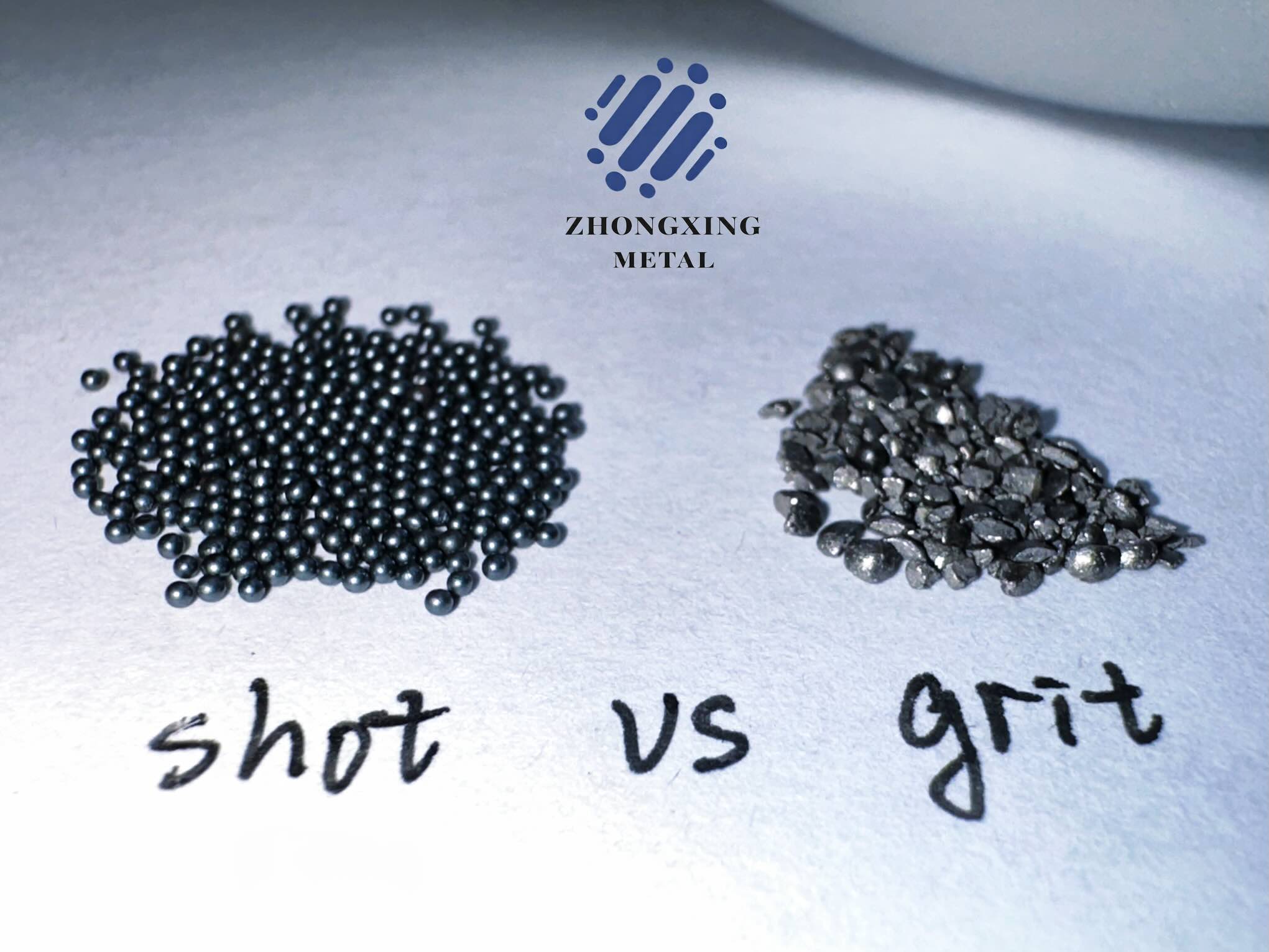
Media shape has a major effect on surface profile. Steel shot is generally round. It peens the surface, removes light scale, and leaves a smoother profile. Steel grit is angular. It cuts into the surface and creates a sharper anchor pattern. Cut wire shot starts as cylindrical particles and gradually conditions during use, giving a more consistent working mix than many irregular abrasives.
For coating preparation, angular grit is often preferred because it creates a more aggressive surface profile. For peening, deburring, and cleaning where the surface should not be too sharp, round shot or conditioned cut wire may be more suitable. For non-ferrous or stainless parts, media material becomes just as important as shape, because cross-contamination can create corrosion risk.
Abrasive Type
Typical Shape
Main Action
Best-Fit Applications
Steel shot
Round
Peening and cleaning
Castings, forgings, descaling, shot peening, general cleaning
Steel grit
Angular
Cutting and profiling
Steel plates, structures, coating preparation, heavy rust removal
Stainless cut wire
Cylindrical, then conditioned
Clean impact with low contamination risk
Stainless steel, aluminum, precision parts, food-grade equipment
Copper cut wire
Cylindrical
Soft metallic cleaning and finishing
Copper alloy parts, non-ferrous surfaces, decorative finishing
Particle Size: The Main Driver of Impact Energy
Larger particles carry more impact energy. Smaller particles provide more surface coverage per kilogram. This is why coarse media can remove heavy scale faster, while fine media often produces a more uniform finish on smaller or thinner parts. The mistake many buyers make is assuming that larger always means better. In reality, large particles can over-profile the surface, reduce coverage, and increase wear inside the blast machine.
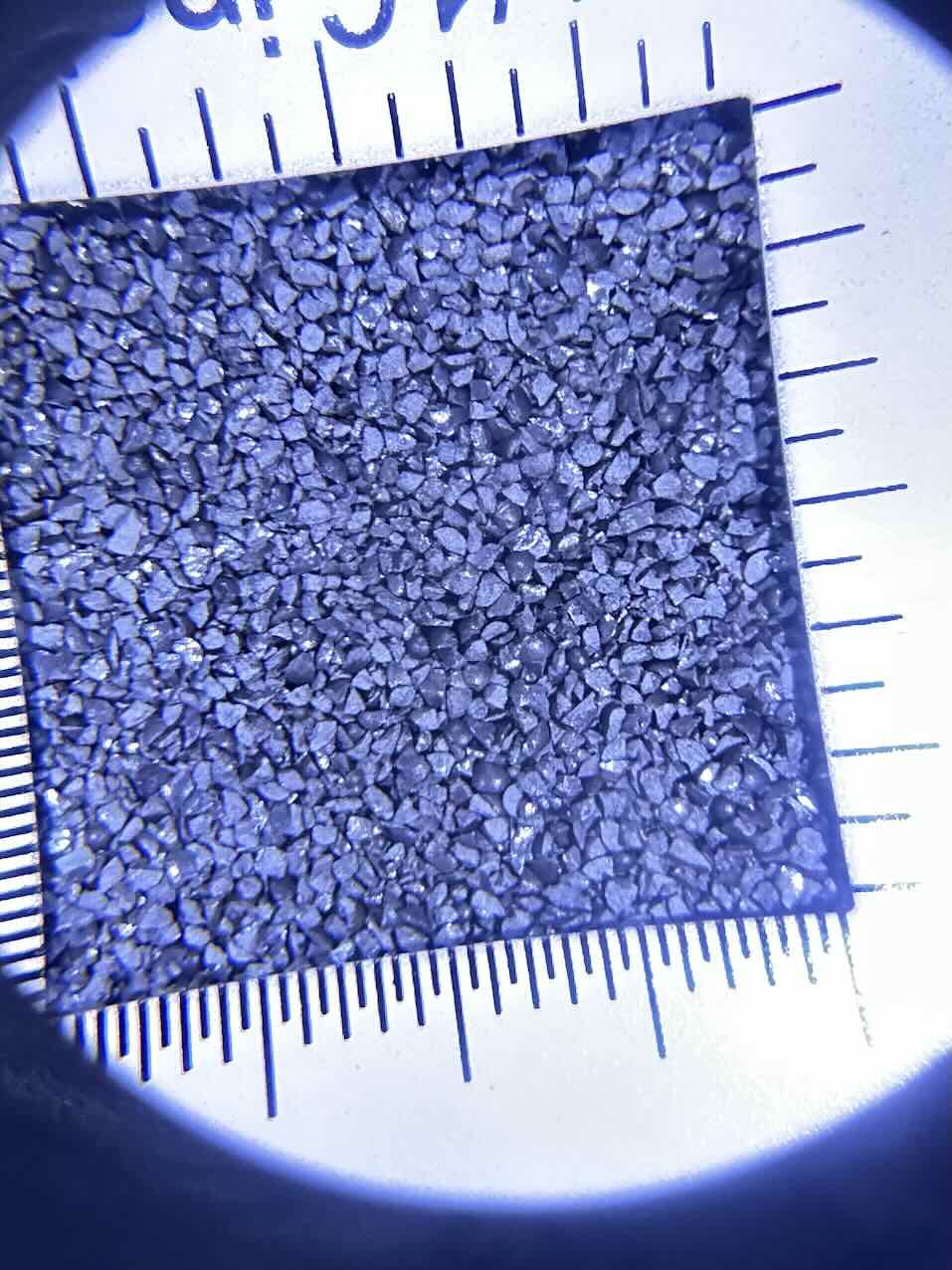
For example, G25 Steel Grit for Blasting is commonly selected when the job requires a strong cutting action and a measurable anchor profile. It can work well on steel structures, plates, and components that need coating adhesion. However, if the substrate is thin or the coating specification requires a fine profile, a smaller grit size may be safer.
Media Size Range
Relative Impact
Surface Coverage
Typical Engineering Use
Fine grades
Low to medium
High
Light rust, thin parts, finishing, small castings
Medium grades
Medium
Balanced
General cleaning, fabrication parts, medium scale
Coarse grades
High
Lower
Heavy rust, thick scale, large castings, coating preparation
Very coarse grades
Very high
Low
Severe contamination, heavy plate, robust castings
Chart: How Abrasive Size Changes Blasting Behavior
The chart below shows a practical engineering relationship. Values are relative indicators for comparison, not fixed laboratory numbers. Actual results depend on wheel speed, air pressure, abrasive flow rate, workpiece hardness, angle of impact, and machine condition.
Abrasive Size Category
Cleaning Power
Surface Coverage
Typical Profile Depth
Fine
■■■□□□□□□□ 30%
■■■■■■■■□□ 80%
Low
Medium
■■■■■■□□□□ 60%
■■■■■■□□□□ 60%
Medium
Coarse
■■■■■■■■□□ 80%
■■■■□□□□□□ 40%
Medium to high
Very coarse
■■■■■■■■■□ 90%
■■■□□□□□□□ 30%
High
Hardness and Durability: Why Cheap Media Can Cost More
Abrasive hardness affects both cleaning speed and breakdown rate. A harder particle cuts faster, but if it is too brittle, it may fracture quickly and generate fines. Softer media may last longer in some conditions, but it may clean slowly or fail to produce the required profile. The best media must hold a stable working mix inside the machine.
In wheel blast machines, unstable media causes several problems: high dust load, inconsistent surface finish, reduced visibility, separator overload, and faster wear of blades and liners. Engineers should not judge abrasive quality only by the first batch result. A useful test should run long enough to measure consumption rate and working mix stability.
Measured Item
Good Sign
Warning Sign
Abrasive breakdown
Stable particle size distribution after repeated cycles
Rapid increase in dust and fines
Cleaning speed
Required cleanliness reached within target cycle time
Repeated blasting needed for the same part
Machine wear
Normal blade, liner, hose, and nozzle life
Maintenance interval becomes shorter after media change
Surface consistency
Similar roughness and appearance across batches
Patchy finish or unstable surface profile
When to Use Stainless Steel Cut Wire
Carbon steel abrasives are not suitable for every substrate. When blasting stainless steel, aluminum, zinc die castings, or components that must remain free from iron contamination, using carbon steel media can create later corrosion problems. Small embedded iron particles may rust after exposure to moisture, even when the base material itself is corrosion resistant.
This is where Stainless Steel Cut Wire Shot becomes valuable. It is commonly used when the surface must be cleaned without introducing carbon steel residue. In engineering terms, the benefit is not only appearance; it is contamination control. Industries such as food machinery, medical equipment, stainless fabrication, valves, and aluminum components often require this extra control.
Workpiece Material
Risk with Carbon Steel Media
Recommended Direction
Stainless steel
Embedded iron contamination and later rust staining
Use stainless cut wire or approved non-ferrous media
Aluminum
Surface discoloration or excessive impact damage
Use softer or contamination-controlled media
Copper alloy
Color change and surface contamination
Use copper or other compatible media
Carbon steel
Usually acceptable
Steel shot or steel grit depending on profile requirement
When Copper Cut Wire Makes Engineering Sense
Copper cut wire is not selected for aggressive descaling. It is selected when the surface needs softer metallic impact, color compatibility, or controlled finishing on non-ferrous components. Compared with steel media, copper is softer and less aggressive, which makes it useful for parts where surface damage must be reduced.
For example, Copper Cut Wire Shot Media may be used for copper alloy parts, electrical components, decorative hardware, and certain finishing operations where carbon steel contamination is unacceptable. The key is to match the media material with the workpiece material and the final appearance requirement.
Machine Type Changes the Abrasive Decision
The same abrasive can perform differently in different equipment. A wheel blast machine throws abrasive at high volume and is efficient for plates, beams, castings, and batch production. An air blast system gives more control but depends heavily on air pressure, nozzle distance, and operator technique. A tumble belt machine exposes parts differently from a hanger-type machine.
Before changing media, engineers should inspect the blasting system. Worn wheel blades, poor separator adjustment, damaged screens, low air pressure, and dust collector problems can all look like abrasive failure. In many plants, the media gets blamed when the real problem is machine condition.
Machine Type
Common Abrasive Choice
Engineering Checkpoint
Wheel blast machine
Steel shot, steel grit, cut wire
Check wheel wear, abrasive flow, separator efficiency
Air blast room
Steel grit, cut wire, specialty media
Check air pressure, nozzle size, hose condition
Tumble belt machine
Steel shot or smaller cut wire
Avoid part-on-part damage and over-blasting
Hanger-type machine
Shot, grit, or cut wire depending on part
Confirm shadow areas and rotation coverage
Abrasive Selection Matrix for Common Problems
The following matrix gives a practical starting point. It should not replace testing, but it helps narrow the selection before requesting samples or quotations.
User Problem
Likely Cause
Recommended Media Direction
What to Test
Rust removal is too slow
Media too small, worn machine, low impact energy
Medium or coarse steel grit
Cycle time, roughness, dust level
Paint adhesion is poor
Insufficient surface profile or poor cleanliness
Angular steel grit
Profile depth and cleanliness grade
Stainless parts show rust stains later
Carbon steel contamination
Stainless cut wire
Contamination test after blasting
Thin parts are dented
Media too large or impact too strong
Smaller shot or softer media
Flatness, edge condition, surface profile
Dust collector load is high
Media breakdown or poor separation
Higher durability media; inspect separator
Fines percentage and replenishment rate
How to Run a Useful Abrasive Trial
A proper abrasive trial should be controlled. Use the same machine, same part type, same blasting time, same loading quantity, and same inspection method. If possible, test two media sizes side by side. Do not rely only on operator comments such as “it looks cleaner” or “it feels faster.” Record numbers.
Trial Data
How to Measure
Why It Matters
Cycle time
Minutes per batch or per square meter
Shows production efficiency
Abrasive top-up
Kg added per shift
Shows consumption and breakdown
Surface roughness
Profile gauge or roughness tester
Confirms coating suitability
Cleanliness
Visual standard or inspection grade
Confirms whether blasting target is reached
Rework rate
Percentage of parts blasted again
Shows hidden cost
Cost per Ton vs. Cost per Finished Part
Purchasing teams often compare abrasives by unit price. Engineers should push the calculation further. The real cost includes abrasive consumption, electricity, machine wear, labor, dust collection, rework, and coating performance. A lower-priced abrasive that breaks quickly may be more expensive in daily production.
Cost Factor
Low-Quality Media Impact
Better Media Impact
Purchase price
Lower initial cost
Higher initial cost
Consumption rate
Often higher due to breakdown
Lower if media has stable durability
Dust generation
Higher filter load and cleaning work
Cleaner operating environment
Cycle time
May be longer
Can be shorter with correct media
Rework
Higher if finish is inconsistent
Lower with stable working mix
What Engineers Should Ask Before Ordering Abrasive Media
A clear inquiry helps the supplier recommend the right product. Instead of asking only for price, provide technical details. The most useful information includes workpiece material, thickness, surface condition, blasting machine type, required roughness, current media, current problem, monthly consumption, and target delivery time.
If the job is coating preparation, include the coating system and required profile range. If the job is casting cleaning, include casting material, sand condition, and target cycle time. If the job involves stainless or non-ferrous parts, state whether iron contamination is acceptable. These details prevent wrong media selection and reduce testing time.
Information to Provide
Example
Workpiece material
Carbon steel plate, stainless steel part, aluminum casting, copper alloy component
Surface condition
Light rust, mill scale, heat scale, burnt sand, old coating
Machine type
Wheel blast, air blast, tumble belt, hanger type, blast room
Required result
Coating profile, clean casting, satin finish, contamination-free surface
Current problem
Slow cleaning, high dust, roughness too high, rust stains after blasting
The most reliable abrasive choice comes from matching the media to the surface problem, machine condition, and inspection requirement. Steel grit is a strong choice when the surface needs cutting action and coating profile. Stainless cut wire is better when contamination control matters. Copper cut wire is useful when softer metallic finishing is required on compatible non-ferrous parts. A short controlled trial with recorded data will usually save more money than choosing only by catalog grade or ton price.
Read More